Residency · Upcoming
Luanda Carneiro Jacoel
Ancestry, memory, temporality
- Dates
- 4–29 May 2026
- Place
- Núcleo Experimental de Performance, Rio de Janeiro
- Affiliation
- NEP / UFRJ · Doctoral researcher
The story
The second doctoral residency, Cartographies of Memory in Performance, unfolded over four weeks at the Núcleo Experimental de Performance (NEP/UFRJ) in Rio de Janeiro, under the supervision of professors Eleonora Fabião and Adriana Schneider, in collaboration with the Norwegian Theatre Academy.
The residency grew out of Luanda's doctoral research Kalunga Unspoken — living archives in dialogue with a legacy in motion, which explores ancestry, memory and temporality in the Afro-diasporic body and asks how performative practices function as living archives. The work is inspired by the symbolisms of Kalunga, the sea, reflecting on the crossing of the Black Atlantic, and takes the legacy of her mother, Sueli Carneiro, as an ancestral principle and a mode of embodied knowledge — memory working at once as political, epistemological and performative praxis.
The residency explored the meeting points of bodily memory, performance, archive and audiovisual practice, understanding the body as a living archive of knowledge, histories and affects. Its central method was the scrapbook: fragments of images, sounds, text, gestures and narratives assembled as a performative act of archiving, on the premise that to perform is also to archive. Over four weeks, collective laboratories alternate with individual mentorship sessions, and participants close by presenting works-in-progress that bring performance and scrapbook together as expanded archives.
The workshops were open to performance artists, actors, dancers, visual artists and interdisciplinary practitioners, with dialogues opened with spaces and artists across Rio — among them Casa Escrevivência, Instituto Criola, Instituto Marielle Franco, IPEAFRO, Jongo da Serrinha and Redes da Maré — and an excursion to Casa Sueli Carneiro in São Paulo for the V Festival.
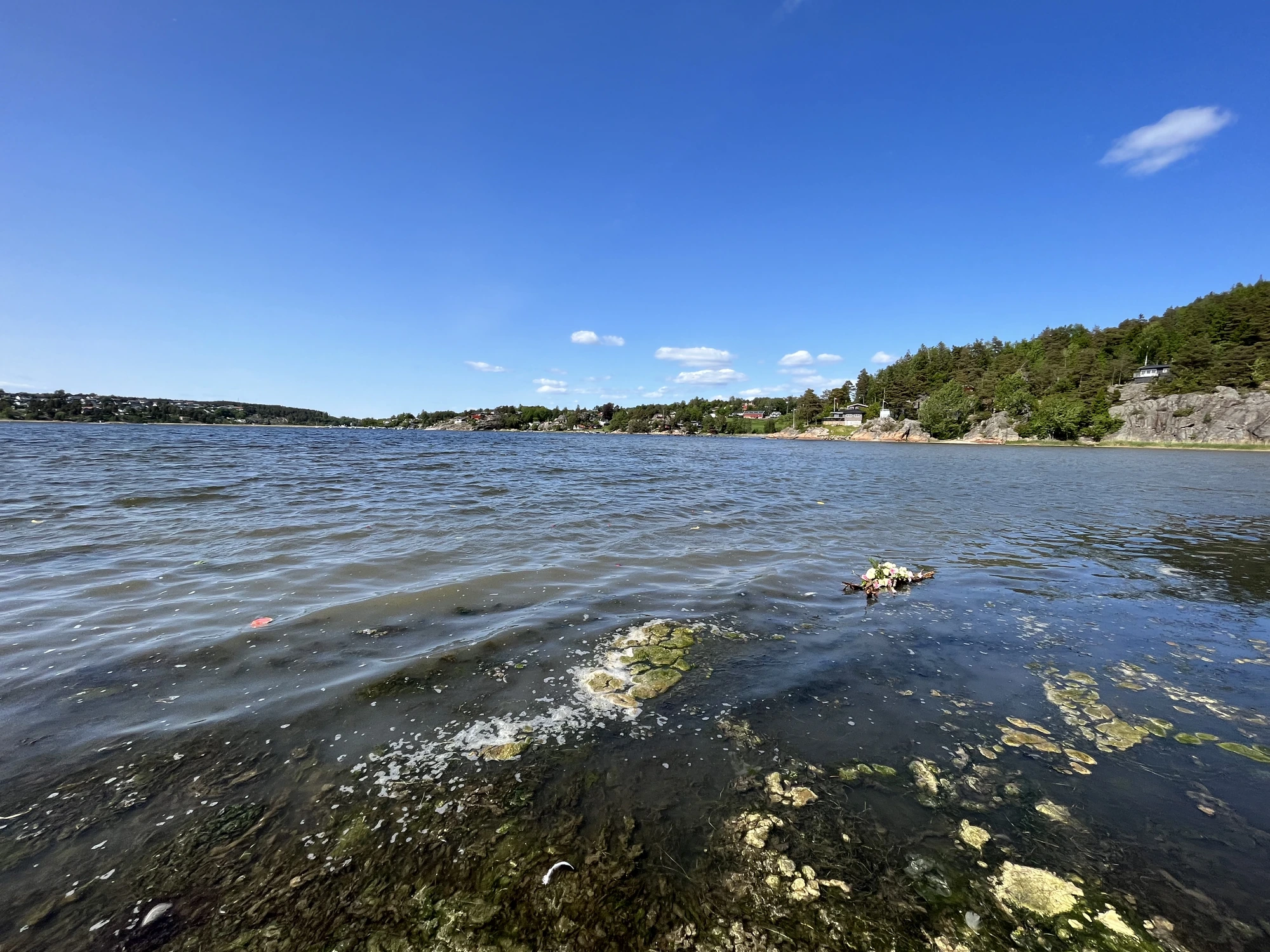
Earlier, in May 2023, Luanda, with Ayesha Jordan and Waldane Walker, led the group in Fredrikstad in rituals of protest, reflection, poetry, listening and conflict resolution while making offerings to the sea.
Luanda Carneiro Jacoel · Full text
Install-Actions: living archives, ritual and embodiment
Warning
This textual device is a dialogue with the unknown, the invisible, the unspoken. The logic is not revealed or explained. It is an experience within the perspective of the unknown. An experience within a spiral, a non-linear way of thinking, speaking and experiencing. An empirical self-management, organization of thoughts, ideas, provocations. A call to listen and open oneself to a poetic, symbolic and invisible journey. An invitation to perceive and experience the unknown as a source of knowledge in itself, to be embodied.
LIVING ARCHIVES
I am a Black female dancer and performance artist from Brazil, working with the principles of ancestry, memory and temporality in the Afro-Diasporic body. My artistic research has a deep focus on the transatlantic trade of enslaved people and the Afro-Diaspora that emerged from it. I have been developing a decolonial artistic practice that seeks to investigate and rewrite unwritten parts of history, using the body itself as a medium. My point of departure – the only legitimate place from which I can speak – is my body.
I understand the body as both a body-home and a body-memory: a living archive that carries my personal history and cultural heritage. This archive is dynamic, operating across multiple perspectives of time and coexistence, and serves as the central vehicle for my work as a performance artist. My practice encompasses and transcends the boundaries of dance, ritual, installation and video art. The artistic practices are inspired by the symbologies of Kalunga. Kalunga means the sea, as well as the burial grounds.
Kalunga is present in the dikenga dia Kôngo cosmogram. A cosmogram from Bantu – ethno-linguistic group, located mainly in sub-Saharan Africa, and is a representation of a life path, between the human and spiritual worlds. The dikenga dia Kôngo cosmogram is a mandala, reflecting the movement of the sun. It is a circular structure divided by a cross at four cardinal points, symbolising the cyclical nature of the life journey. The physical world and the spiritual world are separated by Kalunga (the horizontal line of the cross).
Thus, Kalunga acts as the boundary between the living and the realm where the souls of the ancestors reside – a horizontal, liquid membrane representing the sea or ocean. This concept encapsulates the metamorphic cycle of body to spirit and back again, conceiving life and time in a spiral framework.The dikenga dia Kôngo cosmogram is present in Afro-Brazilians traditions and is incorporated as a cosmovision.
For the Bantu-Kôngo and their diasporic descendants, the journey of the sun across the celestial sphere is metaphorically linked to a human-ancestral trajectory that is infinite, circular and spiral. Kalunga thus emerges as a symbolic site of transition – a liminal space in which the body interacts with both the water archive and the earth archive. Through these systems of communication, Kalunga represents a transitory perspective through which the body, experience and relationship with life are dynamic, mobile and perpetually becoming.
The accumulated history of the Black transatlantic is a space in which the Afro-Diasporic body calls for and remembers what is lost. The ancestral archive Kalunga – the sea – emerged as a transitional entity of belonging. Kalunga stands as the central concept of my performance practices, through which I reflect on the transatlantic trade of enslaved people and the Afro-Diaspora that resulted from this journey through the sea.
My artistic practices embrace interdisciplinary perspectives, co-creation among artists, displacement and nomadism in cultural materials, and the transition of written texts and oral narratives across diverse media. The notion of ritual is pivotal to my work, serving as a live epistemological archive through which to experience memory, history, identity, time and space in performance. It activates and evokes memory and temporality – memory as inheritance in the Afro-Diasporic body, memory as agency and ancestry as inheritance.
My main interest lies in the relationship between embodiment practices and the symbolic universe, mediated by the performer’s body within the creative process. My work explores the dialogue between physicality, metaphor and symbol, with the body serving as a vehicle of communication – a site of events and images generated by the real-time interaction between performer and viewer. Exploringing how embodied experiences are translated or transformed when they are transmitted through media forms, I developed the concept of ‘Install-Actions’.
‘Install-Actions’ integrate bodily movement and visual elements to create performative installations in space. They invite the audience to engage with the unknown, encounter ritual temporality and experience the states of body-presence and transformation. The concept plays with the idea of ‘installing’ memory, entities and bodily images while simultaneously enacting a ritual in space. The viewer’s experience, memory and perception in the moment become an archive in themselves.
What remains after the performance – be it a video, photograph or audio recording – is also an installation and a form of archival. Through this work, a dynamic interaction emerges between entities and materialities, reflecting the principles of Kalunga. The practiced ritual serves as an epistemological live archive, providing a space in which to experience memory, history, identity, time and space within performance. Displacement, re-enactment and embodiment become central strategies for activating and evoking memory and temporality.
Memory, as an inheritance in the Afro-Diasporic body, becomes an agent of transformation. Ancestry serves as both a legacy and an inheritance, embodied through acts of offering, honouring and healing. These actions signify a shift in power, narratives and agency.
Entities themselves
A dialogue with invisible forces – an encounter. Afro-Diasporic aesthetics and technologies. Installation of entities, evocation of archives, left traces, playing with the unknown, navigation of temporalities. These elements form a platform for encounter, exchange and co-creation between artists and their diasporic experiences. This meeting point fosters an interdisciplinary perspective, exploring ‘call and response’ approaches that link social themes such as cultural background, identity and decolonial artistic practices.
This creative logic generates mobile archives across various media, forming a collection of body-movement archives, visual archives, sound archives, textual archives and entity archives – archives that interweave to create a broader performative-digital archive, encompassing videography, audio, photography and written text. Each archive functions as an entity in its own right, possessing an interdependence of communication and content while remaining open to exploration through an intertwined perspective.
These archives manifest in artistic practices as dynamic creations, fostering interdependence and correlation. They invite the audience to embark on their own journey, constructing narratives within the material offered to them. The archive becomes a site of co-creation between the public and the material itself. In this sense, I have embodied my mother’s legacy as an ancestral principle like Kalunga, which represents the sea, a place of memory, an archive, a repository of collective memories, a place of transformation and a place in which unspoken voices may rise to the surface.
My work dialogues with and honours the principle of ancestry inherited in our Black bodies, lifting up ontological and epistemological knowledge for experiential engagement. My practice traces the legacy of my mother as an ancestral principle and a form of embodied knowledge, where memory becomes a political, epistemological, and performative praxis.
LAYERS TRACES UNFOLDING ARCHIVES
The archive serves as a foundational element in my artistic practices, intertwining with the politics of memory – advocating for the right to memory and resisting erasure to insist on existence. These archives are dynamic, operating across multiple temporal perspectives, coexistences, acts of resistance, re-enactments and moments of permanence. An archive traditionally refers to a collection of documents, records and other materials preserved for historical, cultural or legal purposes.
Archives are essential for safeguarding and transmitting collective memory and cultural heritage, offering valuable insights into the past. Beyond this, they play a critical role in shaping and constructing narratives of history and identity. Together, memory, identity and archive are pivotal for understanding and interpreting the past, as well as shaping the present and future.
These tools empower individuals and societies to reflect on past experiences, fostering learning and transformation Traditionally, archival practices have been perceived as static and passive processes, encompassing the collection, organisation and storage of textual, bibliographic and museological documents for consultation. However, with the emergence of a dialogue between archives and the arts, historical documents can now be mobilised in ways that build active and participatory processes.
These interactions are capable of transforming collective memory and history into a living, dynamic narrative. Performative archiving methods utilise artistic and creative practices to engage with records and documents, offering innovative ways of interacting with historical archives. Initiatives in the arts have taken various forms like performance-lectures, artist talks, installations, exhibitions, immersive experiences, fostering a dialogue between archives, artists and audiences.
These approaches have provided new perspectives for reading, listening to and experiencing history. In addition to engaging with archives and documentation, performative methods address the transmission of complex embodied or lived experiences. They question and explore how embodied knowledge is translated or transformed when conveyed through media such as performance, dance, video, image, sound and installation.
By approaching creative processes from the perspective of embodied knowledge, we open up for insights into our perceptions of inner space, movement, memory, imagination, presence and dynamics in relation to space and time. I have explored various performative methods for sharing my artistic practice, including artistic talks, performance-lectures, installations, videos, photography, sound and writing. These methods often raise questions of hospitality, hosting and curating (of spaces, situations or encounters) to generate collaborative exchanges with other artistic expressions and theoretical approaches.
The goal is to create a horizontal platform for dialogue, co-creation and co-narration that can be experienced and shared collectively. As a performance artist, I view artistic work as a channel for dialogue between theoretical and practical approaches – a platform that allows both perspectives to intertwine and operate in correlation to amplify art’s potential as a source of knowledge. In my practice, I engage with and awaken theoretical discussions around the transatlantic trade of enslaved people and the Afro-Diaspora, viewing the sea as a metaphorical space for remembering history. Ritual practices act as an epistemological live archive, enabling experiences of memory, archive, history, identity, time and space in performance.
EMBODIMENT
Afro- Presente embodiment is the ability to perceive the present moment. The ability to manifest your presence, your ontological being. To experience your body perception into the spiral time, into the spiral temporality. It is the manifestation of traces, memories, fragments of images, small pieces, particles, a kaleidoscope. It's a call and response for the ancestry principle inherited in the Afro-diasporic body to manifest. It is the grain of the sand, the skin perception, shiver, silhouette.
No shape. against to revel, to inform, to describe, to linear narratives, to shape, to formalize. The invisible, memories, time, traditional living dances, music, ritual actions, ritualistic memories, and childhood. Inside of me, my inner voice, my thoughts, outside me, my hair, the writings, the whisper of the sea. The desire to encounter and experience ancestry. Personal, daily, and ritual practices towards artistic practices. The 3D perspective of the cosmogram, the experience, the enchantment, the transformation of the space.
Space is a platform of transformation. It has been asked about extended relations, extended connections, diasporic networks, and meeting points. The answer has been about slowing down trust, confidence, and synchronicity. Collective memories have been told, shared, and offered. offered to go deep into connection. The invisible, the time passing through, the co-narratives that are being created at the moment, the instant, the manifestation. The invisible, the principle of ancestry, the principle of presence and becoming.
The sand. The language of the textile-archive is revealed through symbols of a cosmic universe, brings presence, entities and it works as a portal of forces and presences to be manifested, to be in space. To be welcoming. The visual - archives spokes through a visual portal, evoking archives, textures, symbols, temporalities, living archives, a recall. The space, the physical space in dialogue with the symbolic universe, images, and archives that are traveling through time. It is a co - narrative of memories and archives.
The ground is the earth, the sacred place where things happen, where the ancestors belong to. The place where our feet call the invisible, activates the space, the circular, spiral journey of ritual experiences. Ritual as an expanded presence; poetic power. Kinesthetic experience. Sacred Codes. Layers. Belongs to the notion of Terreiro.Ingoma.Cachuera!
closing to opening to closing to opening to closing to opening to closing to opening closing to opening to closing to opening to closing to opening to closing to opening closing to opening to closing to opening to closing to opening to closing to opening closing to opening to closing to opening to closing to opening to closing to opening closing to opening to closing to opening to closing to opening to closing to opening closing to opening to closing to opening to closing to opening to closing to opening closing to opening to closing to opening to closing to opening to closing to opening closing to opening to closing to opening to closing to opening to closing to opening closing to opening to closing to opening to closing to opening to closing to opening closing to opening to closing to opening to closing to opening to closing to opening closing to opening to closing to opening to closing to opening to closing to opening closing to opening to closing to opening to closing to opening to closing to opening closing to opening to closing to opening to closing to opening to closing to opening closing to opening to closing to opening to closing to opening to closing to opening
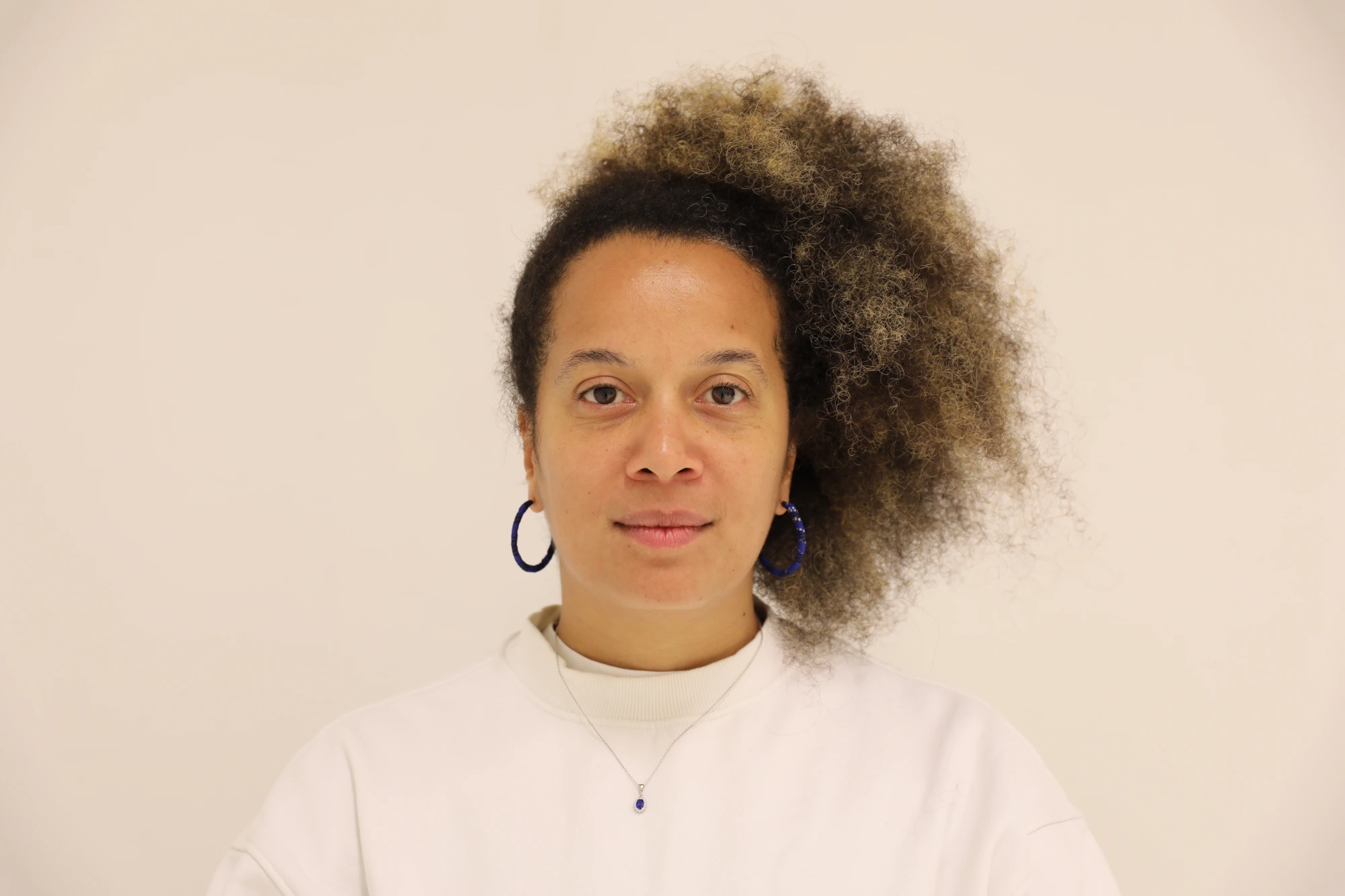
Luanda Carneiro Jacoel - Performance Artist
PhD fellow in artistic research in film and related audio-visual arts (FILMART) at Norwegian Film School (INN) and Norwegian Theatre Academy (NTA) research catalogue / /bodytransit.net // @map_luacaja Casa Sueli Carneiro // @casasuelicarneiro // Legacy director // Programming coordinator at Casa Sueli Carneiro
Week by week
Week 1 · Body-archive and sensory memory
Awakening memory through the senses and recognising the body as a territory of remembrance
Presentation of individual research; curatorial conversation on living archives, ritual and embodiment — Kalunga; laboratory in listening, perception and gesture as body-archive; introduction of the performative diary-scrapbook
Week 2 · Scrapbook as living multimedia archive
Collective experimentation with collage, photography, writing, sound and video
Discussions of materiality, cartographies and the reinscription of memory; oral, written and multimedia narrative; the expanded scrapbook in body, space and installation; sharing of diary-scrapbooks and individual mentorship
Week 3 · Poetics of the body and performative composition
Transforming memory materials into artistic and performative language
Performativity of the archive; dramaturgies of memory; repetition as archive; temporality in body and space; the laboratory “Performing the Archive: Traces, Repetitions, and Presences”
Week 4 · Space, territory and collective memory
Connecting individual memories with public space and shared histories
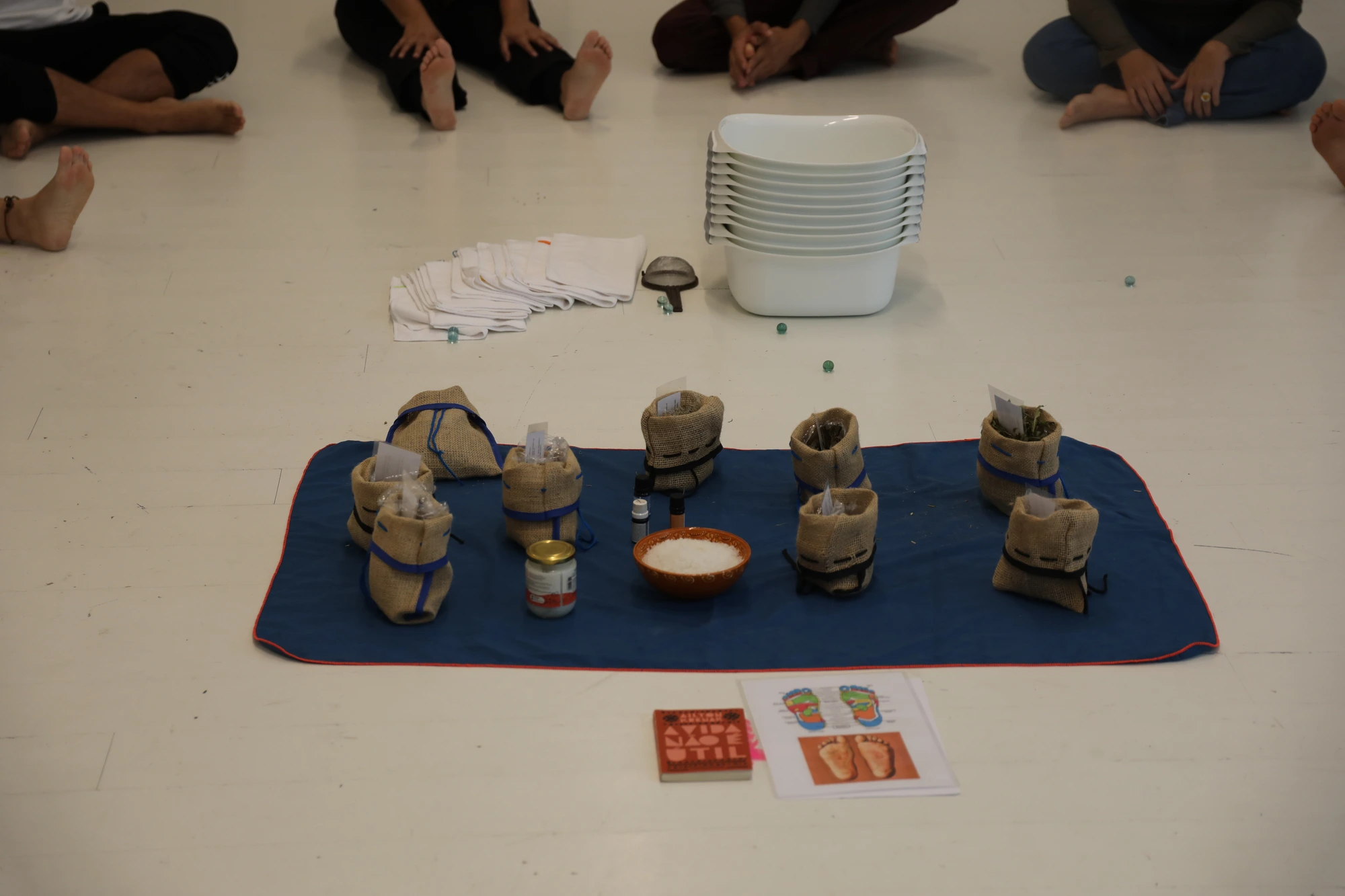
Install-actions — dispatch, offering, healing, sanctuary; drifting through public space; collecting traces; affective mapping; a manifesto-path; final open sharing and a closing circle
Programme
- Performative scrapbook: assembling images, texts, sounds and objects in a process notebook as a device for research and creation
- Embodied knowledge practices: the body as a medium for producing and transmitting knowledge
- Archive in motion: reinscribing memory and questioning traditional notions of document, record, legacy and heritage
- Individual and collective affective maps, and a performative memory diary
- Collective laboratories alongside individual artistic-research mentorship
- A final open sharing: hybrid installation of performance, video and collective scrapbook
Participants
- Luanda Carneiro JacoelPhD in Residence, NTA
- Eleonora FabiãoNEP / UFRJ
- Adriana Schneider AlcureNEP / UFRJ
Images